
 Call Now(980) 505-8560
 Repair Service
 Installation Service
 Service Area
 Brands We Repair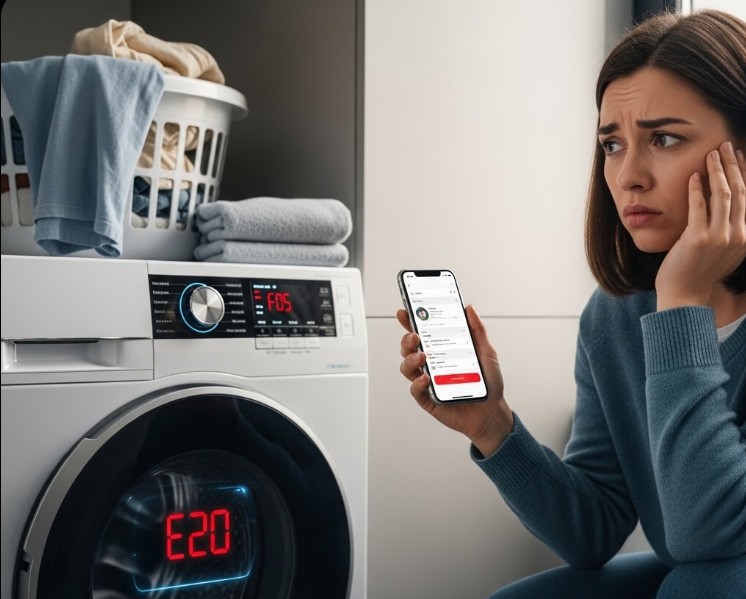
Don’t Panic: Your Guide to Common Washing Machine Error Codes
We have all been there. You walk into the laundry room expecting clean clothes, but instead, your washer is staring back at you with a weird flashing code like “5E” or “F01.” It feels ominous, but it’s actually your machine’s way of talking to you. It’s much better than the alternative, mysterious banging or squeaking and guessing what’s wrong.
Most of the time something simple sets them off. Before you stress about a new machine or a repair bill, try these fixes. If you’d rather leave it to the pros, our washing machine repair in Charlotte team has you covered. We’ve broken down the alphabet soup of codes for the brands we see most around Charlotte.
Samsung Washer Codes: Tech Meets Reality
Samsung machines are sleek and smart, but their sensors can be a bit sensitive. If your display is acting up, it’s usually one of these common culprits.
4E or 4C: The Machine is Thirsty
This means your washer isn’t getting water fast enough.
- The Quick Check: Look behind the machine. Are the faucets turned all the way on? Is a hose pinched against the wall?
- The Pro Tip: Sometimes the “inlet filters” (tiny mesh screens where the hose meets the washer) get clogged with sediment. Turn off the water, unscrew the hoses, and pop those screens out with pliers. Give them a good rinse under the sink, and you’ll likely see that code vanish.
5E or SE: Drainage Drama
Your washer is sitting there full of soapy water and refuses to budge.
- The Fix: Check the bottom front of your machine for a small flap. That’s your drain pump filter. Place a towel down, unscrew it, and clear out the loose change, hair ties, or lint stuck inside.
UE or E4: The “Heavy Towel” Error
This is an unbalanced load. If you’re washing one giant comforter or a single heavy rug, the drum can’t find its center. Open it up, spread the weight around, or add another towel to balance the spin.

LG Washer Codes: Sensible Solutions
LG machines are workhorses, but they have strict safety protocols. When they see an issue, they shut down to protect the motor.
OE: Water isn’t Leaving
Similar to Samsung’s drain error, “OE” means the pump is struggling.
- The Troubleshooting: Make sure your drain hose isn’t pushed too far down into the wall pipe. If it’s too low, it can actually siphon water back into the machine. It should be roughly waist-high (30 to 36 inches off the floor).
LE: Motor Overload
This code can feel scary, but it usually just means the machine got overwhelmed by a massive load or too many suds.
- The Fix: Turn the machine off and let it rest for 10 minutes. This lets the motor cool down. When you restart, try a smaller load with less detergent.
IE: Water Inlet Error
If the machine doesn’t fill to the right level within a few minutes, “IE” pops up. Just like with Samsung, check those hose screens for mineral buildup. If you have hard water, these screens can clog every few months.

Whirlpool Washer Codes: The Old Reliable
Whirlpool has been a staple in Charlotte homes for decades. Their codes are usually very direct.
F01: The “Hiccup” Code
This points to the main control board. Think of it like a computer glitch.
- The Fix: Unplug the washer for a full five minutes. This clears the temporary memory. If it comes back, it might mean the board is actually failing, but a hard reset fixes it more often than you would think.
F08 or E01: Temperature and Filling
Your washer is confused about how much water is inside or how hot it is.
- The Check: If you recently moved the machine, double-check that you did not swap the hot and cold hoses. The machine expects a certain temperature at certain times; if it gets the opposite, it will throw a fit.

F22: Latch Issues
The door isn’t locking. Even if it looks closed, a tiny piece of lint or a stray sock trapped in the seal can prevent the electronic lock from engaging. Wipe the seal and give the door a firm shut.

GE Washer Codes: Built for Durability
GE machines are tough, but they rely heavily on pressure sensors to stay efficient.
E22: Pump Blockage
If your GE washer won’t drain, it’s likely something stuck in the pump. You might need to remove the small panel at the bottom to reach the cleanout. It’s a messy job, but it saves you a service call.
E23: Pressure Sensor Problems
This means the machine doesn’t know how deep the water is.
- The DIY Fix: Under the top cover, there is a thin plastic tube that runs from the drum to a sensor. If that tube gets a tiny pinhole or comes loose, the sensor can’t “read” the air pressure. Reattaching or taping a leak in that tube can often save the day.

When to Put Down the Wrench and Call Us
We love it when homeowners can fix their own gear, but some things just aren’t safe or practical to DIY. If you see these signs, it’s time to bring in the pros:
- That Burning Smell: If you smell ozone or burning rubber, stop the cycle immediately. This is usually a motor or wiring issue that can become a fire hazard.
- Repeated Control Board Codes: If you have reset the machine three times and the “F01” or “EC” code keeps coming back, the electronics are likely shot. Replacing these boards requires specific diagnostic tools to ensure the new part doesn’t short out too.
- Hidden Leaks: If the machine says there is a leak but the floor is dry, you might have an internal crack in the outer tub. This requires taking the whole machine apart to find the source.
- Electrical Trips: If starting your washer immediately trips the circuit breaker, you have a “ground fault.” This is often a shorted heating element and is dangerous to handle without a voltmeter.

According to the local electrical codes here in Mecklenburg County, complex wiring repairs should always be handled by someone licensed to ensure your home stays safe. If your washer is talking to you and you don’t like what it’s saying, just give us a shout. We’ll get your laundry room back to being the quietest room in the house.
Modern washing machines have built-in self-diagnostic systems that can detect over 100 different fault conditions. Error codes are your washer’s way of telling you exactly what’s wrong before a technician even arrives.
Persistent error codes after a reset usually mean an underlying component has actually failed, not just a glitch. Common culprits include a faulty door latch, a worn drain pump, or a failing water inlet valve. A reset clears the display but cannot fix a broken part.
Frequently asked questions
Can I fix a washing machine error code myself?
Some error codes, like an unbalanced load or a clogged drain filter, are easy DIY fixes. Others, like motor control errors or control board failures, require a trained technician. When in doubt, check your owner’s manual first, then call a pro if the error persists after basic troubleshooting.
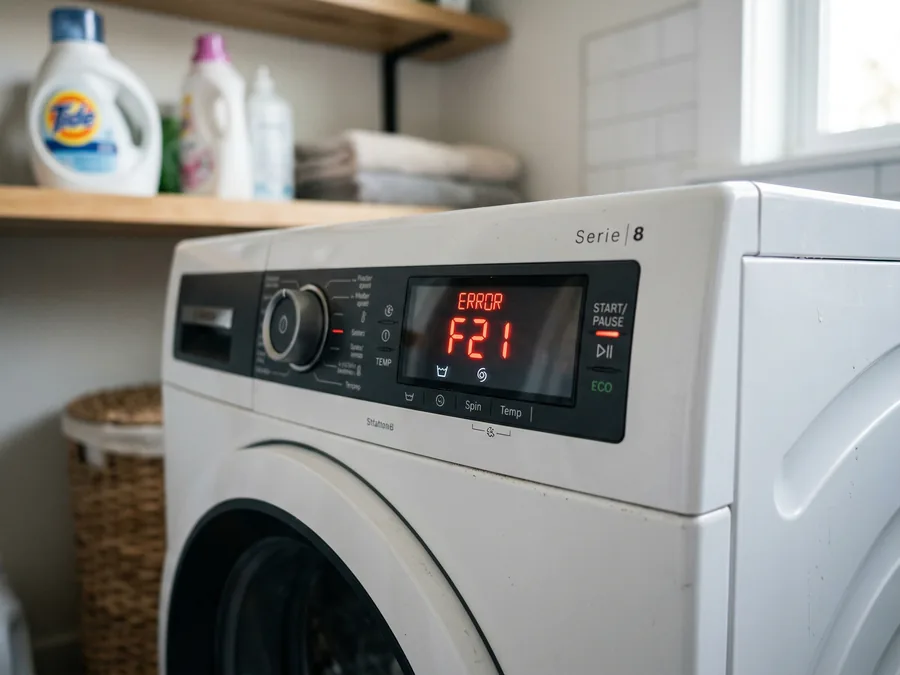
What does an F21 or 5d error code mean on a Whirlpool washer?
F21 on a Whirlpool washer indicates a draining problem, usually a clogged pump filter or kinked drain hose. The 5d (or Sd) code means excessive suds, typically caused by using non-HE detergent or too much detergent in a front-load washer.
When should I call a professional for washer repair in Charlotte?
Call a professional if the error code involves the motor, control board, or heating element, or if the machine will not complete a cycle after basic resets. Our washer repair team in Charlotte can diagnose and fix most issues on the first visit.